What are we teaching when we teach writing?

Writing is really, really hard. Learning to write even more so.  Robert Kellogg – cognitive psychologist and author of The Psychology of Writing – describes writing as the cognitive equivalent of digging ditches. Learning to write is the hardest thing we ask children to do in schools, yet despite the resolute focus on curriculum in England, few schools have a well-developed writing curriculum. Schools might have a plan for when specific books will be taught and use these as a stimulus for devising writing tasks. However,  in terms of being really clear about what component writing knowledge is taught when, and why, and how this progressively builds in complexity over time, I venture to suggest that in many schools,  this is not yet as developed as it could be. There is a degree of the horse following the cart in having a writing curriculum developed to fit in with text choice rather than text choice  for writing  exemplifying increasing complexity over time of sentence construction, authorial voice and so on.

A central problem is a lack of clarity about what the components of the writing process actually are.  On top of that, there is the perhaps even more thorny issues of how to balance practising these components in relative isolation so that children can develop fluency and accuracy in their application alongside how to integrate these skills together in creative writing for a real audience. Education fashion waxes and wanes in emphasizing one or other aspect, when, to state the tiresomely obvious, children need both and need them taught in a way where the technical enables the creative. Teaching the technical without it feeding into the creative is pointless. Teaching the creative without building technical competence is futile.

Because writing is such hard work, motivating children to do the work necessary to learn how to do it well is a challenge. The profession tends to come up with one of two solutions to the motivation problem; either make sure children have all the tools they need with to be successful before expecting much by the way of cognitive ditch digging or try and make ditch digging seem irresistibly glamorous – ‘imagine all those crops you will irrigate!’ – so that the effort seems purposeful while skating over learning any tedious mechanics of how to wield your spade effectively.

If we focus too much on the allure of the final product without teaching children how to develop technical proficiency, then we risk demotivating children because it the whole process becomes impossibly hard. If we focus on developing one process at a time, we remove the motivational effects of producing an authentic piece of writing that someone else might find interesting. There is a sweet spot somewhere that harnesses the benefits of both. There is also a whatever the opposite of a sweet spot is– a sour spot? – where neither source of motivation is leveraged.

There are probably several reasons why schools might occupy this sour spot.  To give curriculum time to both the development of fluency in the various components of writing and  to the production of high-quality authentic pieces of writing consumes a hefty amount of a finite and already stretched timetable. The accountability measures processes in England, be they SATs at the end of year 6 or GCSEs at the end of year 11, do not obviously incentivise schools to conceptualise writing as a journey from the technical to the creative.   For example, primary schools might teach grammar in order for children to pass the SPAG test, without drawing sufficient attention to why an author might choose to use a fronted adverbial or embedded clause.  A primary school might also make the calculation that spending a lot of time teaching spelling is not a good investment since the marks awarded for spelling are relatively few.  Punitive accountability systems distort understanding of what the building blocks of developing as a writer actually are, with schools mistaking the requirements of high stakes assessments for a curriculum.  So for example, the Ofsted subject report for English described how ‘external assessments at both primary and secondary level unhelpfully shape the curriculum.’[1] 

  • Schools expect pupils to repeatedly attempt complex tasks that replicate national curriculum tests and exams. This is at the expense of first making sure that pupils are taught, and securely know, the underlying knowledge they need.
  • Some pupils are given considerable help to access these complex tasks, wasting precious time and resources on activities that do not result in them making progress.
  • [Secondary] schools do not always identify the grammatical and syntactical knowledge to be taught for writing, and so do not build on what has been taught at primary school. Instead, written tasks are often modelled on GCSE-style assessments.[2]

What is this underlying knowledge that children need to develop into competent writers? How to we teach this knowledge in a way that feeds into and enables the creative? When do we need to work on component knowledge in isolation and when do we integrate this knowledge within complex, creative tasks?  To understand this, I think it is useful to unpick what we mean by knowledge in term so the English curriculum and what the journey from knowledge to skills (aka procedural knowledge) looks like.

It’s not so long ago that teachers use to say things like ‘English is a skills subject. You can’t really talk about knowledge in English.’ These days teachers might accept this is not quite right but still struggle to unpick what the knowledge is within English and how it relates to writing creatively.

Let’s start by reminding ourselves about the different kinds of knowledge. The Ofsted subject report talk of foundational knowledge. However, I think it is useful to break this down further.  First of all we substantive knowledge. Substantive knowledge can be categorised as either conceptual knowledge or procedural knowledge – what is often referred to as a skill.  Conceptual knowledge is about knowing that…. and procedural knowledge is about knowing how to…. So for example, using learning about metaphors we could unpack this as follows:

 Substantive knowledge
Conceptual… know that… because…​Metaphors are ways of describing something by referring to something else which is the same in a particular way.
Procedural… know how to… and be able to…​ (Skills: involves a verb)Identify the use of metaphor in a text. Explain in what way a metaphor is the same as the thing it describes.

To be clear, children are not expected to be able to parrot the conceptual form of words above. They need to be able to understand what a metaphor is. They don’t necessarily need to use this exact formulation of words to explain what it is.

Or

 Substantive knowledge
Conceptual… know that… because…​A sentence must contain a subject and a verb.
Procedural… know how to… and be able to…​ (Skills: involves a verb)Write a simple sentence that contains a subject and a verb and identify both.   Identify a fragment and expand it into a sentence .

Or

 Substantive knowledge
Conceptual… know that… because…​When writing lower case h, the ascender needs to be tall enough to distinguish it from an n and that to form the letter you start at the top of the ascender.
Procedural… know how to… and be able to…​ (Skills: involves a verb)Be able to write the letter h correctly.

So far, so very technical. What about creativity and meaning, I hear you ask? This is where disciplinary knowledge comes in. Disciplinary knowledge in English pivots around the interactions of authors and audiences and can also be subdivided into conceptual and procedural knowledge.  To return to the examples above:

Substantive knowledgeDisciplinary knowledge
Conceptual… know that… because…​Metaphors are ways of describing something by referring to something else which is the same in a particular way.Know that the purpose of a metaphor is to help the reader understand something more clearly. Know that people may differ in their choice of metaphors to describe a particular thing (‘In English there are many right answers’).
Procedural… know how to… and be able to…​ (Skills: involves a verb)Identify the use of metaphor in a text. Explain in what way a metaphor is the same as the thing it describes.Evaluate the effectiveness of a metaphor in various authors’ work.   Use metaphor in their own writing to develop the reader’s understanding of character. Evaluate one’s own use of metaphor.

The teaching sequence is something like this – though some steps could probably be swapped around, particularly steps 1 and 2. A ‘teaching sequence’ could mean anything from a part of a lesson to a topic of work to something returned to again and again over many years. The basic concept of metaphor might be understood by a chid in year 2. However, over time, in a coherent, connected curriculum, the examples of metaphor to which  a child is exposed will illustrate increasingly more complex ideas. Without such enabling knowledge, the chance of children devising interesting or provocative metaphors themselves is remote.

 Substantive knowledgeDisciplinary knowledge
Conceptual… know that… because…​We start off sharing examples of metaphors and explaining what a metaphor is.While also explaining why they can help readers understand more clearly.  
Procedural… know how to… and be able to…​ (Skills: involves a verb)We then help children identify metaphors in texts.We then help children explain in what way a metaphor is the same as the thing it describes.We then evaluate the effectiveness of specific metaphors in selected texts.Then children use metaphors in their own writing to develop the reader’s understanding of character.   Then children evaluate the effectiveness of the metaphors they and their classmates have used, possibly making changes to their own work.

The sequence goes something like this:

  • Explain and exemplify a thing (substantive, conceptual knowledge)
  • Explain why it is important to readers (conceptual, disciplinary knowledge)
  • Practice identifying the thing and working with the thing on a technical level (procedural, substantive knowledge)
  • Use the thing to actually communicate meaning to an audience  (procedural, disciplinary knowledge)
  • Evaluate if what you’ve written does the job it is intended to do to help the reader (procedural , disciplinary knowledge)
  • Revisit all of this several times in different contexts
  • Later, consciously do this alongside a whole lot of other things you’ve learnt, when and only when it is appropriate for the reader (rather than the demands of the mark scheme) to do so

Here’s another example:

Substantive knowledgeDisciplinary knowledge
Conceptual… know that… because…​A sentence must contain a subject and a verb.Know that without both a subject and a verb, the reader will find it hard to make sense of what we are writing.
Procedural… know how to… and be able to…​ (Skills: involves a verb)Write a simple sentence that contains a subject and a verb and identify both.  Identify a fragment and expand it into a sentence.Write simple sentences for a communicative purpose.  Check that these make sense to a reader. Make changes where necessary.  

And here it is as a teaching sequence.

 Substantive knowledgeDisciplinary knowledge
Conceptual… know that… because…​We start off sharing examples of simple sentences, explaining they always have a subject and a verb and identifying these.  While also explaining the reader can’t make sense of what we are writing unless both are included.  
Procedural… know how to… and be able to…​ (Skills: involves a verb)We then help children identify subjects and verbs and where they are absent.We then help children expand fragments into complete sentences.Then children write simple sentences to describe a picture or animation to someone else who may not have seen it.   Then children evaluate the sentences they have written to check that they make sense (because they include both a subject and a verb), making changes where necessary.

The journey is one of developing technical proficiency as an enabler of creative communication.

Here’s another example:

Substantive knowledgeDisciplinary knowledge
Conceptual… know that… because…​When writing lower case h, the ascender needs to be tall enough to distinguish it from an n and that to form the letter you start at the top of the ascender.It is important to write letters clearly because readers want to read our writing. If it is hard to tell which letter is which, they might find it too hard and give up. If we have a stable seating position, effective pencil grip and form our letter correctly, with practice it will become easy for us to write.
Procedural… know how to… and be able to…​ (Skills: involves a verb)Be able to write the letter h correctly. Notice when my formation of the letter h is insufficiently clear and correct when practicing letter formation.Notice when my formation of the letter h is insufficiently clear and correct when writing independently. Write legibly when communicating in writing.

And another:

Substantive knowledgeDisciplinary knowledge
Conceptual… know that… because…​Know that in nonfiction writing a paragraph usually needs to start with a topic sentence and then include further sentences with supporting detail.Know that the topic sentence helps the reader understand what the paragraph is going to be about and the supporting detail explains the topic sentence more fully, by giving more evidence or explaining the reason why or the stages in a process.   Know that a plan can help us identify the supporting detail we need to include to ensure that our paragraph explains or topic sentence to a reader. And/or  Know that as we are writing, we should check that we are including sufficient supporting detail to explain our topic sentence to a reader.
Procedural… know how to… and be able to…​ (Skills: involves a verb)Given a series of sentences, identify which should be the topic sentence and which should be the supporting detail.  Given two topic sentences, select relevant supporting details from a list​.  Given a topic sentence, generate supporting detail.  Given supporting details, generate a suitable topic sentence[3].Be able to write a plan in note form for a paragraph. Be able to write a well-structured nonfiction paragraph and  evaluate its effectiveness in communicating meaning to the non-present reader.

 I think for this one, some of the conceptual disciplinary knowledge comes after practising the procedural disciplinary knowledge.

And just in case you are wondering what this might look like for reading:

Substantive knowledgeDisciplinary knowledge
Conceptual… know that… because…​Know that authors deliberately leave out information when they write for two different reasons: because they assume the reader already knows something and putting in too much obvious information would be boring; in order to make the story more interesting by keeping the reader guessing. Know that when we are reading, we should listen in our head to check that what we are reading makes sense. If it does not make sense to us, we should go back and reread the sentence or paragraph again.
Procedural… know how to… and be able to…​ (Skills: involves a verb)Identify in a paragraph where the author has left out information to keep the reader guessing.Check what we are reading makes sense to us when we are reading and take appropriate action when it doesn’t.

English teaching spans a variety of disciplines or, to use the language of Ruth Ashby and Christine Counsell, disciplinary quests:

Each subject is… a product and an account of an ongoing truth quest, whether through empirical testing in science, argumentation in philosophy/history, logic in mathematics or beauty in the arts.’[4]

Ruth Ashby expands further on this idea of disciplines as quests and identifies four different category of quest. English spans all of these:[5]

  • The descriptive quest seeks to describe reality using empirically derived facts and logic to either confirm or replace accepted theory. Its quest therefore is for a single, universally agreed though provisional truth. Truth seeking in much of science and maths follows a descriptive quest. Within English, phonics, letter formation, technical definitions and some aspects of grammar are givens. The pronunciation of the grapheme <e> may vary, but the set of variances is a bounded one, with limits.
  • The interpretive quest seeks to interpret reality through discussion and argumentation. There is no expectation of the possibility of a single truth around which all agree.  Truth seeking in much of history, religious education and human geography follows an interpretive quest, as does the interpretation of literature in English.
  • The expressive quest seeks to express truths, often through the medium of the arts. In English, creative writing follows an expressive quest. Here there are many truths and popular acclaim is as valid as scholarly opinion.
  • The problem-solving quest seeks to find solutions to problems, such as created within design and technology, computing and so on. Within English, a set of instruction that successfully enables a reader to accomplish a task is an example of English in problem solving mode.

This quotation by C.R Milne expresses how the descriptive and the expressive perform different roles, the one giving us a universal truth, the other an invitation to a more personal truth. Within the discipline of English, both have a valued place.

‘The astronomer may tell us something about the moon, but so too does the poet. The astronomer’s moon is everybody’s moon; the poet’s is very much his own and not everyone can share it.’[6]

Within English, there is substantive knowledge that is often descriptive in this sense  and not up for interpretation (‘everybody’s moon’).  Something either is or is not a sentence or a correct spelling or a metaphor or a paragraph. This is usually something everybody agrees on. Then there is disciplinary knowledge and this is quite different. This can be expressive, or interpretive or – and here I build on Ruth Ashby’s work – metacognitive. Here there are wrong answers, certainly but also many right answers (one’s own moon).  The substantive is the enabler of the disciplinary. The disciplinary puts the substantive to work and provides the rationale for learning it.

We can summarise this as follows:

Substantive knowledgeDisciplinary knowledge
 Knowledge as descriptive. (Often there is one, agreed answer)Knowledge as interpretive, expressive or metacognitive. (There may be many right answers)
Conceptual… know that… because…​Knowing various rules, techniques, structures, conventions and vocabulary that authors and speakers use to make meaning.Knowing that when we study English, we are studying how authors and speakers – including ourselves – try to make meaning to share with an audience.   Know that when writing, authors are usually communicating with a non-present reader and this brings particular challenges both when we write (as we have to bear in mind the needs of the non-present reader) and when we read (as we have to work to make sense of what the writer has written.)   Know that to  communicate meaning effectively, writing or speech needs to be clear and orientated towards its intended audience in a way that is either interesting, informative, persuasive or provocative. [7]  This is so that the audience thinks it is worthwhile putting in effort to try to understand what the author is saying.   Know that therefore we should monitor and evaluate our own writing and speech to check that the meaning is suitably clear, and its intended audience will find it interesting, informative, persuasive or provocative.   Know that the meaning an author intends is open to interpretation.
Procedural… know how to… and be able to…​ (Skills: involves a verb)Identifying these rules, techniques, structures and vocabulary in texts and in speech.   Using these component rules, techniques, structures and vocabulary in discrete tasks through developing accuracy and fluency rather than for a specific audience.   Procedural knowledge, or skills development, is about enabling subsequent creativity by ensuring learners have the necessary tools to communicate with an audience in a way that is clear and interesting, informative, persuasive or provocative.Engage in creative meaning produced for an audience through the interpretation and production of texts and talk that integrate rules, structures and vocabulary that is clear and either interesting, informative, persuasive or provocative.   Monitoring and evaluating our own meaning making both whether we are audience or author.   Interpretation and evaluation of the meaning making of others.

When I started teaching in the late ‘80s, teaching writing was exclusively focused on the disciplinary – having something to say and publishing your work for an audience, with a little bit of redrafting and refining thrown it (by writing work out ‘in best’). Writing was either to be made into a book or put on display – allegedly for peers to read. We did not teach spelling, derided as mere mechanics, but did teach handwriting – the visual appearance of texts being valued as a way of enticing the reader. We did not explicitly teach text structures though we did read to children a lot of really high-quality literature. Non-fiction did not feature very much.  Some children did very well. Some did incredibly badly and not having been taught phonics, were completely unable to write anything remotely comprehensible.  Thus their inner author was not set free, as the approach purported to enable, but was securely shackled by their ignorance and the ideological idealism of their teachers.

Then in 1996,  the National Literacy Taskforce was established, ushering in the National Literacy Project and then Strategy. This really focused on phonics for both reading and spelling,  text structures, including a whole gamut of non-fiction text types, and knowledge of written language.  For example, the excellent publication Grammar for Writing was a game changer, providing well thought out strategies for teaching children to write well at the sentence level.  These were exciting times. Levels of attainment shot up. However, this shift came with trade-offs, the school day only having a finite number of hours. Because teachers were spending more time on phonics, sentence and text structure, the emphasis on sharing texts with an audience beyond one’s teacher reduced.

There was, however,  a new ‘audience’ in town, and one that had demanding requirements. Writing standard assessment tasks – SATs were introduced in 1995, ushering in an era of the marker as  prime audience.  Being held accountable for standards of writing did help to improve attainment – but over time the emphasis on text structure – or genre – began to eclipse all other elements, aided and abetted by the requirements of the National Curriculum of the time.  The abolition of the writing SAT in 2012 did not actually change this, since it was replaced by a system of moderated teacher assessment that was just as heavily focused on genre. Even when the National Curriculum removed the requirement to study numerous genres, the focus of teaching multiple genres lingered on.

Over time, learning to write morphed into learning how to achieve the requirements of the teacher assessment framework.  This involved producing writing that ticked various boxes. Writing became an exercise in producing something that enabled boxes to be ticked. Teaching writing turned into a process where the teacher shared some writing and showed how it ticked various boxes – maybe with some discrete teaching on how to tick a particular box – and then children were given a shopping list of things that they had to include in order for their audience – the mark scheme – to be satisfied.  Redrafting work in order to rectify unticked boxed also became a big thing, accompanied by angst about how independently this had been done.

The dictatorship of the mark scheme as audience meant that a genuine sense of writing for an actual reader disappeared. Choices about vocabulary, syntax, structure or syntax were replaced by choices based on harvesting marks. When writing was assessed by Sats, spelling hardly contributed any marks at all, with a concomitant lack of emphasis in terms of curriculum time. Ditto handwriting.

The introduction of the SPAG test (that’s spelling, punctuation and grammar to those who do not know the joys of this assessment) did help shape teaching away from being almost exclusively focused on text level structure and coherence towards thinking a bit about the sentence. It did mean children were actually taught about grammar and about different ways of structuring sentences. This was an improvement. There were however two problems. The first was that the scope of the grammatical features 11-year-olds were meant to be able to identify strayed beyond the useful and into the abstruse. I’m old enough to have been taught grammar at school and to have learned Latin. However some of the knowledge children are tested on gets me second guessing myself. For example, the difference between a propositional or adverbial phrase or between an embedded  or relative clause does not come to me automatically but something I have to talk myself through. Linked to this is the second problem. The test is great at getting children to be able to feature spot. It is less good at getting children to be able to use features purposefully in their writing. It was however, eminently teachable. At the school where I was headteacher, despite our challenging demographic, our scores in the SPAG test were sky high. This did not translate to children deliberately choosing to use embedded clauses or prepositional phrases to make their writing clearer or more interesting for the reader. The sense of a reader as a reader – as opposed to marker – had completely disappeared. The inner author was better equipped and hence freer than when explicit teaching was frowned upon. It was, however, a rather limited kind of freedom.

The result of all these different approaches is that a relatively large minority of children are not very motivated to write because either they have not been given all the tools they need with which to be successful and the effort involves seems to far outweigh any reward or the enterprise lacks meaning – digging ditches in order to dig ditches.

There have been various approaches to motivate children to undertake the hard work necessary in learning to write.  The first of these involves the quest for the most irresistible stimulus about which children will be so desperate to write that, adherents of this approach believe, all other concerns fall away. Give something exciting to write about and the other barriers that make writing hard will magically fall away, or at least become less of a hurdle. A second is the reward of an audience who will appreciate and admire your work. A third is the satisfaction of producing something beautiful. A fourth is amplifying the importance of writing for future exams and employment success.  All of these will work to some degree for some children and all of them have some merit. However, collectively they fail to get to the root of the problem. They all try to motivate children to do something hard by dangling a reward at the end of the process. None of them seek to make the process less arduous in the first place.

Producing a piece of text involves doing several different things at once.  The cognitive load involved in trying to orchestrate all of these in rapid succession is immense. A different solution is to isolate each component, and teach these separately initially, so that finite cognitive resources are only having to focus on one thing at a time. Children experience success which is highly motivating. Then, when at least some of these processes have become automated, children can begin to integrate the various process together.

The drawback of this approach is the inverse of those outlined above. By focusing on one process at a time, it effectively removes the motivational effects of producing an actual piece of writing. For some processes, it also makes the reference point of the reader more tangential. Yes, when you are learning to spell, you are learning to spell in order that a reader can understand your writing. That’s less obvious that when you write an actual piece of text for a specific audience.

However, this drawback can be remediated by providing scaffolding that does the work of some of the processes for the learner, allowing learners to concentrate on just one or two processes at a time while still enjoying the motivational benefits of creating something worthwhile that is shared with others. For example, while Reception children need to focus a great deal of time in developing competence with the transcriptional enablers of technology, this should not mean that they are not also able to spend time  composing for an audience, whether orally or via using drawing and possibly emergent writing. For example, the app Chatta provides an easy way for children to record, replay and share  their early attempts at writing sentences. 

Striking a balance between devoting time to working on discrete components in isolation  and time to use components together in more complex tasks of meaning making is the key curriculum challenge when teaching writing. Different schools may come up with slightly different emphases. We should be wary of decrying those who deviate  ever so slightly from our preferred solutions with a little more or a little less of the component or the complex than our own answers to this problem.  For example, I would see both the work of Andrew Percival and Stanley Road Primary in Oldham and the work of Ross Young and Felicity Ferguson at The Writing for Pleasure Centre  as thoughtful responses to trying to give appropriate weighting to both  the technical and the creative, (though I tend more to Team Percival, for now at any rate.)


[1] Telling the story: the English education subject report – GOV.UK

[2] Telling the story: the English education subject report – GOV.UK

[3] This sequence is based on chapter X of The Writing Revolution

  • [5] Ashbee, R (2021) “Curriculum Theory, Culture and the Subject Specialisms” Routledge

[6] This whole section is indebted to Article: Substantive and Disciplinary knowledge – e-Qualitas Teacher Training with particular thanks for the C.R.Milne quotation.

[7] I could have added in further adjectives such as analytic but decided for the sake of clarity to restrict myself to just four. Balancing the non-present and unknown reader’s desire for clarity with their potential desire for nuance and comprehensiveness is always an authorial challenge!

What are we teaching when we teach writing?

The Handwriting Revolution

There is a reason some children dislike writing. Communicating through writing is a hugely complex, composite task that requires competence in each of the underlying component skills to do well. It is the most complex thing we ask children to do. Yet too often, children are expected to work on complex tasks before they have the necessary skills. While some children are fine with this and find the act of communicating motivating enough to put their fledgling skills into practice, for others it can result in frustration and demotivation.  

Joan Sedita’s Writing Rope describes 5 component strands that each need attention when learning to write.  One of these strands is transcription and that strand is composed by two further strands: spelling and handwriting/keyboarding. Handwriting is not something many teachers know a lot about. It’s a bit of a Cinderella area of the curriculum, both in terms of time allocated and teacher expertise.  Yet children in primary school spend a large amount of time with a writing implement in hand. So my hunch is this is a massively important area of learning that needs a revolution in teacher CPD.  And it so happens that Ofsted have just published a research review that argues that transcription in general and handwriting in particular needs much more attention if we are going to enable all children to be successful at writing.

This blog is my contribution to this revolution. Teachers deserve to be evidence-informed about what is most likely to work in this area of teaching. In order to understand what the evidence says, this blog in based on an interview I did with Margaret Williamson who is an absolute fount of knowledge of all things handwriting related. Margaret works for Kinetic Letters, a company that provides CPD for teachers and a teaching programme on handwriting. However, this is not intended as a puff piece for that particular product. It’s about helping teachers understand what handwriting entails and what to do so that children find it easy and it isn’t a barrier to learning. The rest of the blog is therefore written in question-and-answer format. Margaret and I did  this interview before Christmas – so long before the publication of the Ofsted research review – but it has taken us a while to whittle it down from the 80  pages of transcript into blog form!

CS: So, my first question is why is teaching handwriting important? The curriculum is really crammed and everyone’s fighting for their little piece. Probably handwriting is quite marginalised in many schools but here comes Margaret saying it needs to be brought out of the shadows and given a proper emphasis. Why does it deserve quality curriculum time?

MW: Handwriting is the fundamental foundation for writing success. Pupils need automaticity in handwriting so that when they are required to write, their brain is free to concentrate on what they’re wanting to say rather than being distracted by physical discomfort, or issues with producing the letters. It deserves quality curriculum time, since in order to master this complex interaction of cognitive and motor skills, pupils need careful, systematic teaching of the skills involved, and the time to practise them. In addition to promoting automaticity, psychological research confirms that handwriting actually develops connectivity patterns in the brain, producing optimal conditions for learning. And the physical dexterity acquired through handwriting helps pupils with handling tools and typing.

When pupils master the physical and written elements of handwriting, resulting in legible script, it not only benefits spelling development but also gives writing a genuine purpose. Their friends and teachers are able to read their thoughts and ideas which otherwise may have remained unexpressed or not acknowledged. Automaticity in letter production, combined with a strong, stable writing position and comfortable pencil hold, enable the speed and stamina to convey all their thoughts within the time allotted to the task. Teachers can then praise progress, assess their understanding, and plan next steps for their learning. All these factors boost the pupil’s self-esteem, encouraging further engagement and expression because they know that their ideas are important and valued.

In sharp contrast are those pupils who despite being able to express themselves well orally, when asked to write, their engagement and enthusiasm drops. For others, underlying anxieties may come into play- that they’re not going to be successful, or that writing makes their hand ache, or that it’s a pointless activity as no-one can read it. This may prompt them to start misbehaving, or simply try to avoid the situation.

CS: And do you think that is all down to handwriting or partly down to handwriting?


MW: I think handwriting is a huge factor. If pupils are engaged during verbal discussion, but enthusiasm dwindles when you ask them to write, then handwriting is going to be a significant player. Of course, there are other factors – are they finding it easy to spell the words, or construct sentences? However, these elements become moot if you can’t actually get your ideas down on paper. So I would say that handwriting is the foundation of writing, that then enables those other very important skills to begin to flow.


CS: I think that some people would agree with the diagnosis of the problem but have a different solution and say that therefore we should just do much more orally. I don’t agree with that myself.  Part of it is just practical. If it’s written down, the teacher can see what you’re thinking, but they can’t hear simultaneously what 30 people are saying, it’s just not feasible. It’s the difference between talk which is a synchronous communication mechanism, and writing which is asynchronous. The transient nature of speaking provides all sort of logistical challenges in the classroom. Whereas writing allows thought to be made permanent, or at least semi-permanent, which means more people can have access to your thoughts – your peers as well as your teachers. Which isn’t an argument against also developing and valuing oracy, but it can’t replace communicating through writing.

MW: Exactly, and of course there are some pupils for whom writing could become the easier way to communicate. Children who are slower at processing for example can find that by the time they are ready to say something, either somebody else has already done so, or the conversation has moved on. Others lack the confidence to speak out loud but writing gives them the way to rehearse and refine their ideas.

CS: Because writing is a tool for thinking extended thoughts.

MW: The ability to write helps you engage with education, develop as a person, and improve confidence in your own thoughts and arguments. Handwriting is communication- if it’s legible, others can read your ideas. If you can read your own writing, then you are able to edit and polish your work, expand, rephrase, and make your communication clearer.

CS: So what does learning to handwrite actually entail? I think teachers tend to think it’s learning a letter formation scheme. But it’s way more than that, isn’t it?

MW: That’s right, because it requires both motor and cognitive skills. The motor skills require postural strength in order to maintain an effective writing position; to sit still enough to concentrate and hold the pencil comfortably whilst controlling tiny movements accurately and at speed. The cognitive involves learning correct and consistent letter formation through systematic teaching, with sufficient time to practise and build automaticity. However, it also involves learning how to space letters properly. Incorrect spacing within and between words, or sentences that sprawl haphazardly over numerous lines, makes writing hard to scan or edit.

CS: This corresponds with what we know about saccades – the jumps that our eyes make when we read. Our eyes don’t move smoothly along text but make sudden jumps then fixate on a few characters then jump again. The spaces between words help us navigate those jumps. If they are the wrong size, or within words, then we make the wrong size of jump which is why incorrectly spaced writing is less legible.

MW: Spacing also helps the speed and flow of writing, and eventually joining. When letters are correctly spaced, it is easier to extend the finish into the next one without creating big loops in between, making it easier to read. This is also really important because another misconception in writing is that when you join letters, you join every single one.

CS: Yes- I was listening to handwriting expert Steve Graham a few weeks ago and he was saying that

exclusively cursive writing is not faster than non-cursive (manuscript). In fact, the fastest writing was a mixture of some joined letters, some not. Which is not what I have always been told – but apparently the idea that cursive is faster is a myth. Adults write faster than children because they’ve had more practice. Coincidentally they tend to use cursive but it’s the practice and not the cursive that’s behind the speed.

I don’t work in England anymore, so joining is not a problem here in Guernsey but in England cursive is in the National Curriculum. It’s in the assessment criteria. So there’s a real push to do it. Do you think that’s counterproductive?

MW: I think it’s completely counterproductive until the foundations of the formation, heights and spacing of letters are automatic. Once they are, and pupils are writing faster, they will often intuitively start to leave the pen on the page between letters, which of course is all joining actually is. At this stage other joins are simple and quick to teach, building systematically and progressively, rather than pupils thinking they have to learn a whole new way of writing.

CS: So, what should be going on in Reception for handwriting?

MW: It’s important to create enabling environments to build physical and cognitive foundations for writing. Modern life is becoming increasingly sedentary and so pupils need to build the postural strength and stability to be able to sit still and control writing implements. Hand and finger strength is dependent upon postural strength; it enables manipulation and dexterity of the fingers, and this again needs targeted provision to systematically develop children’s control. Manipulation of different sizes and resistances of tools and materials, increasing the complexity of their use, builds this organically.

CS: It’s like the STEP approach in PE, where you change the space, task, equipment, or people to increase or decrease challenge. So it’s not just saying ‘Oh yeah, they’re doing that for gross motor or fine motor’. In the same way that the profession over the last few years has really thought about the granular detail of the knowledge that a child might need to know in geography or whatever, it is fundamental to know the granular detail of what physical progression for handwriting looks like.

MW: Yes, exactly. The progression is essential. One of the biggest questions I always get asked by teachers of older pupils is, ‘how can we break the bad habits they’ve acquired in handwriting?’ Well, the answer is not to inadvertently encourage the bad habits in the first place, by rushing to provide writing activities for which they don’t yet have the skills!  It’s counterproductive, and it tends to be an adult desire, rather than the child’s. However, children love making marks, and there are many ways to provide for this, for example simply using hands or huge brushes rather than writing tools that require a tripod grip, before they have the physical skills and have been explicitly taught how to do that. Then, when tools become appropriate, they should be slim to suit small hands, and long enough to be supported across the hand. Also, there should be limits to how long pupils use them for until they have built the stamina to maintain the tripod grip. The initial scaling down of letters from whole body movements, can be achieved by writing with their fingers in shaving foam, or shallow sand trays. If we think in terms of cognitive load, with this approach they’re able to focus on the formation, grounding, and heights of the letters, before having to also control the writing tool.

CS: I can envisage some people thinking this is dumbing things down- if we say we are not going to have a writing table too early and not to trace over letters, but it’s not. You can’t microwave children to develop physically quicker than they’re going to. I mean, you can help by providing environments and contexts that are very focused on specific strengthening of certain areas of the body. But thinking about handwriting in this way means that everything becomes purposeful. Adults trained in this method actually develop children who learn to write very quickly.

MW: Precisely. In my experience, when all this is taught systematically in line with their development, children are beginning to put letters into words, and even words into simple sentences, by the end of the first term of Reception.  So in fact you’re actually going to prompt significantly faster progression.

CS: Writing is always the aspect of the Early Learning Goals where more children struggle. Because results are lower, the temptation is to push children to try and write with a pencil. But it doesn’t work like that. Yes, we want them to do it, but there are some prerequisites, the developmental steps that just have to be there.

MW: Yes, and of course Reception is in fact a very long period of time in a child’s development. I believe that we should break the year down into smaller units with regards to handwriting expectations. In the autumn term, teachers provide very firm foundations in all of the aspects mentioned previously: gross and fine motor skills, and learning letter formation through movement of varying scales, first without tools and then with them. During the spring term, most can maintain a tripod grip to write correctly formed letters, and combine them into words and simple sentences which they can read themselves. Thus, by the summer term, handwriting automaticity is developing well. Writing speed and stamina can then be the focus in Year 1.

CS: What about phonics and handwriting?

MW: There is a helpful quote from the DfE Reading Framework which states that, ‘Some practices may confuse children, make it more difficult than necessary for them to learn or discourage them. Such as when the teacher asks children to write independently before they have the necessary skills.’So we don’t want them writing in a phonics session until they have the necessary skills. Throughout this blog we’ve been talking about the importance of pupils acquiring these systematically: the physical skill of positioning their bodies for holding the pencil, knowledge of how the letters are formed, placement of the letters correctly together in a word, and the understanding of comparative heights to avoid confusion when they try to read their work.

Early in the first term the cognitive load is more manageable if handwriting and phonics are taught and practised separately. After a few weeks, once pupils are writing letters that they themselves recognise as being the same as those they see the teacher writing, they will be able to benefit from writing in the phonics session. And equally of benefit, they will be able to use both handwriting and phonics skills in writing in the wider curriculum.

CS: My last question is what about learning to type on a keyboard? I’d argue that instead of obsessing about learning cursive we should teach children typing in key stage 2. Do you agree?

MW: I do, we need to teach typing, but in addition to handwriting, not as a replacement. Most children can master automaticity before they can master touch-typing. And there are practical problems with typing such as where do you buy a keyboard that fits a young child’s hand size.

Also due to research, we now understand more about the benefits of each. Studies using MRI scans or EEF recordings show how when writing by hand, the brain connectivity patterns are beneficial for general learning. Other studies indicate that children write faster and with more ideas, and students make more effective notes when writing by hand rather than typing. It benefits memory, recall and creativity when you’re handwriting a stream of consciousness that isn’t interrupted as it might be when typing, where the temptation is to keep pausing to edit individual sentences.

So it is clear that because in this digital age we have more choices for how to produce writing for different purposes, it is essential to equip our pupils with the skills to access both- by teaching automaticity in both typing and handwriting.

The Handwriting Revolution

Test to the Teach

making-good-progressWhen Daisy Christodoulou told us not to teach to the test, I assumed she was mainly concerned with teachers spending too much lesson time making sure children understood the intricacies of the mark scheme at the expense of the intricacies of the subject. Personally, I’ve never spent that much time on the intricacies of any mark scheme. I’ve been far too busy making sure children grasp the rudimentary basics of how tests work to have time spare for anything intricate.   For example, how important it is to actually read the question.  I spend whole lessons stressing ‘if the question says underline two words that mean the same as …., that means you underline TWO words. Not one word, not three words, not two phrases. TWO WORDS.    Or if the questions says ‘tick the best answer’ then,  and yes, I know this is tricky, the marker is looking to see if you can select the BEST answer from a selection which will have been deliberately chosen to include a couple that are half right. BUT NOT THE BEST. (I need to lie down in a darkened room just thinking about it).
But this is not Christodoulou’s primary concern.

Christodoulou’s primary concern is that the way we test warps how we teach. While she is well aware that the English education system’s mania for holding us accountable distorts past and present assessment systems into uselessness, her over-riding concern is one of teaching methodology.  She contrasts the direct teaching of generic skills (such as using inference for example) with a methodology that believes such skills are better taught indirectly through teaching a range of more basic constituent things first, and getting those solid.  This approach, she argues, creates the fertile soil in which  inferring (or problem solving or  communicating or critical thinking or whatever) can thrive. It is a sort of ‘look after the pennies and the pounds will look after themselves’ or (to vary the metaphor) a ‘rising tide raises all boats’ methodology. Let me try to explain…

I did not come easily to driving. Even steering – surely the easiest part of the business – came to me slowly, after much deliberate practice in ‘not hitting anything.’ If my instructor had been in the business of sharing learning objectives she would surely have told me that ‘today we are learning to not hit anything.’

Luckily for the other inhabitants of Hackney, she scaffolded my learning by only letting me behind the wheel once we were safely on the deserted network of roads down by the old peanut factory. The car was also dual control, so she pretty much covered the whole gears and clutch business whilst I concentrated hard on not hitting anything.  Occasionally she would lean across and yank the steering wheel too.  However, thanks to her formative feedback (screams, yanks, the occasional extempore prayer), I eventually mastered both gears and not-hitting-anything.  Only at that point did we actually go on any big roads or ‘ to play with the traffic’ as she put it.  My instructor did not believe that the best way to get me to improve my driving was by driving. Daisy Christodoulou would approve.

Actually there was this book we were meant to complete at the end of each lesson. Michelle (my instructor) mostly ignored this, but occasionally she would write something – maybe the British School of Motoring does book looks –  such as ‘improve clutch control,’ knowing full well the futility of this –  if I  actually knew how to control a clutch I bloody well would. She assessed that what I needed was lots and lots of safe practice of clutch control with nothing else to focus on. So most lessons (early on anyway) were spent well away from other traffic, trying to change gears without stalling, jumping or screeching, with in-the-moment verbal feedback guiding me. And slowly I got better. If Michelle had had to account for my progress towards passing my driving test, she would have been in trouble. Whole areas  of the curriculum such as overtaking, turning right at a junction and keeping the correct distance between vehicles were not even attempted until after many months of lessons had taken place. Since we did not do (until right near the very end) mock versions of the driving test, she was not able to show her managers a nice linear graph showing what percentage of the test I had, and had not yet mastered.  I would not have been ‘on track’. Did Michelle adapt my learning to fit in with these assessments?  Of course not!  She stuck with clutch control until I’d really got it and left ‘real driving’ to the future- even though this made it look like I was (literally) going nowhere, fast.  Instead Michelle just kept on making sure I mastered all the basics and gradually added in other elements as she thought I was ready for them.  In the end, with the exception of parallel parking, I could do everything just about well enough. I passed on my third occasion.

I hope this extended metaphor helps explain Christodoulou’s critique of teaching and assessment practices in England today. Christodoulou’s book ‘Making Good Progress?’ explores why it is that the assessment revolution failed to transform English education. After all, the approach was rooted in solid research and was embraced by both government and the profession. What could possibly go wrong?

One thing that went wrong, explains Christodoulou, is that instead of  teachers ‘using evidence of student learning to adapt…teaching…to meet student needs’[1], teachers adapted their teaching to meet the needs of their (summative) assessments. Instead of assessment for learning we got learning for assessment.

Obviously assessments don’t actually have needs themselves. But the consumers of assessment – and I use the word advisedly –  do.  There exist among us voracious and insatiable accountability monsters, who need feeding at regular intervals with copious bucketfuls of freshly churned data.  Imagine the British School of Motoring held pupil progress meetings with their instructors. Michelle might have felt vulnerable that her pupil was stuck at such an early stage and have looked at the driving curriculum and seen if there were some quick wins she could get ticked off before the next data drop.  Preferably anything that doesn’t require you to drive smoothly in a straight line…signalling for example.

But this wasn’t even the main thing that went wrong. Or rather, something was already wrong, that no amount of AfL could put right. We were trying to teach skills like inference directly, when, in fact, these, so Christodoulou argues, are best learnt more indirectly by learning other things first. Instead of learning to read books by reading books, one should start with  technical details like phonics. Instead of starting with maths problem solving, one should learn some basic number facts. Christodoulou describes how what is deliberately practised – the technical detail –  may look very different from the final skill in its full glory. Phonics practice isn’t the same as reading a book.  Learning dates off by heart is not the same as writing a history essay.  Yet the former is necessary, if not sufficient basis for the latter. To use my driving metaphor, practising an emergency stop on a deserted road at 10mph when you know it’s coming is very, very different from actually having to screech to a stop from 40mph on a rainy day in real life, when a child runs out across the road. Yet the former helped you negotiate the latter.

The driving test has two main parts; technical control of the vehicle and behaviour in traffic (a.k.a. playing with the traffic). It is abundantly clear that to play with the traffic safely, the learner must have mastered a certain amount of technical control of the vehicle first. Imagine Michelle had adopted the generic  driving skill approach and assumed  these technical matters could be picked up en route, in the course of generally driving about,  and assumed that I could negotiate left and right turns at the same time as maintaining control of the vehicle. When I repeatedly stall, because the concentration it take to both brake and steer distracts me from concentrating on changing gears to match this slower speed, Michelle tells me that I did not change down quickly enough, which I find incredibly frustrating because I know I’ve got a gears problems, and it is my gears problem I need help with. But what I don’t get with the generic skill approach is time to practice changing gears up and down as a discrete skill. That would be frowned on as being ‘decontextualised’. I might protest that I’d feel a lot safer doing a bit of decontextualized practice right now – but drill and practice  is frowned upon – isn’t real driving after all – and in the actual test I am going to have to change gears and steer and brake all at the same time (and not hit anything) so better get used to it now.

Christodoulou argues that the direct teaching of generic skills  leads to the kind of assessment practice that puts the cart, if not before the horse, then parallel with it. Under this approach, if you want the final fruit of a course of study to be an essay on the causes of the First World War, the route map to this end point will punctuated with ‘mini-me’ variations of this final goal; shorter versions of the essay perhaps. These shorter versions are then used by the teacher formatively, to give the learner feedback about the relative strengths and weaknesses of these preliminary attempts. All the learner then has to do, in theory, is marshal all this feedback together, address any shortcomings whilst retaining, and possibly augmenting, any strengths. However, this often leaves the learner none the wiser about precisely how to address their shortcomings.  Advice to ‘be more systematic’ is only useful if you understand what being systematic means in practice, and if you already know that, you probably would have done so in the first place.[2]

It is the assessment of progress through  interim assessments that strongly resemble the final exam that Christodoulou means by teaching to the test.  Not because students shouldn’t know what  format an exam is going to take and have a bit of practice on it towards the very end of  a course of study.  That’s not teaching to the test. Teaching to the test is working backwards from the final exam and then writing a curriculum punctuated by  slightly reduced versions of that exam – and then teaching each set of lessons with the next test in mind.   The teaching is shaped by the approaching test.  This is learning for assessment.  By contrast Christodoulou argues that we should just concentrate on teaching the  curriculum and that there may be a whole range of other activities to assess how this learning is going that may look nothing like the final learning outcome. These, she contends, are much better suited to helping the learner actually improve their performance. For example, the teacher might teach the students what the key events were in the build up to the first World War, and then, by way of assessment, ask students to put these in correct chronological order on a time line.  Feedback from this sort of assessment is very clear –if events are in the wrong order, the student needs to learn them in the correct order.  The teacher teaches some  small component that will form part of the final whole, and tests that discrete part. Testing to the teach, in other words, as opposed to teaching to the test.

There are obvious similarities with musicians learning scales and sports players doing specific drills – getting the fine details off pat before trying to orchestrate everything together.  David Beckham apparently used to practice free kicks from all sorts of positions outside the penalty area, until he was able to hit the top corner of the goal with his eyes shut.  This meant that in the fury and flurry of a real, live game, he was able to hit the target with satisfying frequency.  In the same way, Christodoulou advocates spending more time teaching and assessing progress in acquiring decontextualized technical skills and less time on the contextualised ‘doing everything at once’, ‘playing with the traffic’ kind of tasks that closely resemble the final exam.  Only when we do this, she argues, will assessment for learning be able to bear fruit. When the learning steps are small enough and comprehensible enough for the pupil to act on them, then and only then will afl be a lever for accelerating pupil progress.

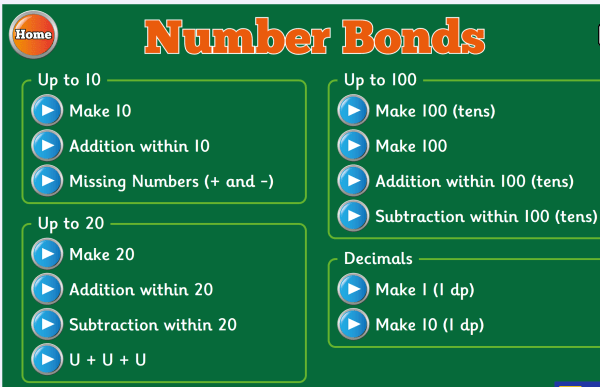
Putting my primary practitioner hat on, applying this approach in some areas (for example reading) chimes with what we already do,  but in others (I’m thinking writing here) the approach seems verging on the heretical.  Maths deserves a whole blog to itself, so I’m going to leave that for now – whilst agreeing whole-heartedly that thorough knowledge of times tables and number bonds  (not just to ten but within ten and within  twenty   – so including  3+5 and 8+5 for example) are  absolutely  crucial. Indeed I’d go so far as to say number bonds are even more important than times table knowledge, but harder to learn and rarely properly tested. hit-the-button I’ve mentioned hit the button in a previous blog. We have now created a simple spreadsheet that logs each child’s score from year 2 to year 6  in the various categories for number bonds. Children start with make 10 and stay on this until they score 25 or more (which means 25 correct in 1 minute which I reckon equates to automatic recall.  Then then proceed through the categories in turn – with missing numbers and make 100 with lower target scores of 15.  Finally they skip the two decimals categories and go to the times table section – which has division facts as well as multiplication facts. Yes!  When they’ve got those off pat, then they can return to do the decimals and the other categories. We’ve shared this, and the spreadsheet –  with parents and some children are practising at home each night. With each game only taking one minute, it’s not hard to insist that your child plays say three rounds of this first, before relaxing.  In class, the teachers test a group each day in class, using their set of 6 ipads.  However since kindle fire’s were on sale for £34.99 recently, we’ve just bought 10 of them (the same as the cost of 1 i pad). We’ll use them for lots of other things too, of course – anything where all you really need is access to an internet browser.

When we talk about mastery, people often talk about it like it’s this elusive higher plan that the clever kids might just attain in a state of mathematical or linguistic nirvana when really what it means is that every single child in your class – unless they have some really serious learning difficulty – has automatic recall of these basic number facts and (then later) their times tables.  And can use full stops and capital letters correctly the first time they write something. And can spell every word on the year 3 and 4 word list (and year 1 & 2 as well of course).  And read fluently – at least 140 words a minute, by the time they leave year 6. And have books they love to read – having read at least a million words for pleasure in the last year (We use accelerated reader to measure this – about half of year 6 are word millionaires already this year and a quarter have read over 2 million words.) How about primary schools holding themselves accountable to their secondary schools for delivering cohorts of children who have mastered all of these (with allowances for children who have not been long at the school or who have special needs)  a bit like John Lewis is ‘Never Knowingly Undersold’, we  should aim (among other things) to ensure at the very least, all our children who possibly could, have got these basics securely under their belt.

(My teacher husband and I now pause to have an argument about what should make it to the final list.   Shouldn’t something about place value be included? Why just facts?  Shouldn’t there be something about being able to use number bonds to do something?  I’m talking about a minimum guarantee here – not specifying everything that should be in the primary curriculum. He obviously needs to read the book himself.)

Reading

My extended use of the metaphor of learning to drive to explain Christodoulou’s approach has one very obvious flaw. We usually teach classes of 30 children whereas driving lessons are normally conducted 1:1. It is all very well advocating spending as much time on the basics as is necessary before proceeding onto having to orchestrate several different skills all at the same time, but imagine the frustration the more able driver would have felt stuck in a class with me and my poor clutch control.  They would want to be out there on the open roads, driving, not stuck behind me and my kangaroo petrol.  Children arrive at our schools at various starting points. Some children pick up the sound-grapheme correspondences almost overnight; for others it takes years. I lent our phonics cards to a colleague to show here three-year-old over the weekend; by Monday he knew them all. Whereas another pupil, now in year 5, scored under 10 in both his ks1 phonic checks.  I tried him again on it recently and he has finally passed.  He is now just finishing turquoise books. In other words, he has just graduated from year 1 level reading, 4 years later.  This despite daily 1:1 practice with a very skilled adult, reading from a decodable series he adores (Project X Code), as well as recently starting on the most decontextualized reading programme ever (Toe by Toe – which again he loves) and playing SWAP. He is making steady progress – which fills him with pride – but even if his secondary school carries on with the programme[3], at this rate he won’t really be a fluent reader until year 10. I keep on hoping a snowball effect will occur and the rate of progress will dramatically increase.

Outliers aside, there is a range of ability (or prior attainment if you prefer) in every class and for something as technical as phonics, this is most easily catered for by having children in small groups, depending on their present level. We use ReadWriteInc in  the early years and ks1.  Children are assessed individually by the reading leader  for their technical ability to decode, segment and blend every half term and groups adjusted accordingly.  So that part of our reading instruction is pretty Christodoulou-compliant, as I would have thought it is in most infant classes.  But what about the juniors, or late year 2 – once the technical side is pretty sorted and teachers turn to teaching reading comprehension.  Surely, if ever  a test was created solely  for the purposes of being able to measure something, it was the reading comprehension test, with the whole of ks2 reading curriculum one massive, time wasting exercise in teaching to the test?

I am well aware of the research critiquing the idea that there are some generic comprehension skills that can be taught in a way that can be learnt from specific texts and then applied across many texts, as Daniel Willingham explores here.  Christodoulou quotes Willingham several times in her book and her critique of generic skills is obvioulsy influenced by his work. As Willingham explains, when we teach reading comprehension strategies we are  actually teaching vocabulary, noticing understanding, and connecting ideas. (My emphasis).  In order to connect ideas (which is what inference is), the reader needs to know enough about those ideas, to work out what hasn’t been said as well as what has been. Without specific knowledge, all the generic strategies in the world won’t help. As Willingham explains

Inferences matter because writers omit a good deal of what they mean. For example, take a simple sentence pair like this: “I can’t convince my boys that their beds aren’t trampolines. The building manager is pressuring us to move to the ground floor.” To understand this brief text the reader must infer that the jumping would be noisy for the downstairs neighbors, that the neighbors have complained about it, that the building manager is motivated to satisfy the neighbors, and that no one would hear the noise were the family living on the ground floor. So linking the first and second sentence is essential to meaning, but the writer has omitted the connective tissue on the assumption that the reader has the relevant knowledge about bed‐jumping and building managers. Absent that knowledge the reader might puzzle out the connection, but if that happens it will take time and mental effort.’

So what the non-comprehending reader needs is  very specific  knowledge (about what it’s like to live in a flat), not some generic skill.  It could be argued then that schools therefore should spend more time teaching specific knowledge and less time elusive and non existant generic reading skills. However, Willingham concedes that the research shows that even so, teaching reading comprehension strategies does work. How can this be, he wonders? He likens the teaching of these skills as similar to giving someone vague instructions for assembling Ikea flat pack furniture.

 ‘Put stuff together. Every so often, stop, look at it, and evaluate how it is going. It may also help to think back on other pieces of furniture you’ve built before.

This is exactly the process we go through during shared reading. On top of our daily phonics lessons we have two short lessons a week of shared reading where the class teacher models being a reader using the eric approach. In other words, we have daily technical lessons,  and twice a week  we also have a bit of ‘playing with the traffic’ or more accurately, listening to the teacher playing with the traffic and talking about what they are doing as they do it.  In our shared reading lessons, by thinking out loud about texts, the teacher makes it very explicit that texts are meant to be understood and enjoyed and not just for barking at and that  therefore we should check as we go along that we are understanding what we are reading (or looking at). If  we don’t understand something, we should stop and ask ourselves questions.   It is where the teacher articulates that missing ‘connective tissue’,  or ‘previous experience of building furniture’  to use Willingham’s Ikea metaphor, sharing new vocabulary and knowledge of the how the world works, knowledge that many of our inner city children do not have.  (Although actually for this specific instance many of them would know about noisy neighbours, bouncing on beds and the perils of so doing whilst living in flats.)

eric

For example, this picture (used in ‘eric’ link above) gives the the teacher the opportunity to share their knowledge that that sometimes the sea can get rough and that this means the waves get bigger and the wind blows strongly. Sometimes it might blow so hard that it could even blow your hat right off your head. As the waves rise and fall, the ship moves up and down and tilts first one way, and then the other. (Pictures are sometimes used for this  rather than texts so working memory is relieved from the burden of decoding).

When teaching children knowledge is extolled as the next panacea, it’s not that I don’t agree, it’s just that I reckon people really underestimate quite how basic some of the knowledge we need to impart for our younger children. I know of primary schools proudly adopting a ‘knowledge curriculum’ and teaching  two hours of history a week, with two years given over to learning about the Ancient Greeks.  I just don’t see how this will help children understand texts about noisy neighbours, or about what the sea is like (although you could do that in the course of learning about Ancient Greece if you realised children didn’t know), or, for that matter, what it is like to mill around in bewilderment.  The only kind of assessment that will help here is the teacher’s ‘ear to the ground’ minute by minute assessment – realising that -oh, some of them haven’t ever seen the sea, or been on a boat. They don’t know about waves or how windy it can be or how you rock up and down.   This is the kind of knowledge that primary teachers in disadvantaged areas need to talk about all the time.  And why we need to go on lots of trips too. But it is not something a test will pick up nor something you can measure progress gains in.  The only way to increase vocabulary is one specific word at a time. It is also why we should never worry about whether something is ‘relevant’ to the children or not. If it is too relevant, then they already know about it – the more irrelevant the better.

I don’t  entirely agree with the argument that since we can’t teach generic reading skills we should instead teach lots more geography and history since this will give  children the necessary knowledge they need to understand what they read.   We need to read and talk, talk talk about stories and their settings -not just what a mountain is but how it feels to climb a mountain or live on a mountain, how that affects your daily life, how you interact with your neighbours.  We need to read more non fiction aloud, starting in the early years.  We need to talk about emotions and body language and what the author is telling us by showing us.  A quick google will show up writers body language ‘cheat sheets’. We need to reverse engineer these and explain that if the author has their character fidgetting with darting eyes, that probably means they are feeling nervous. Some drama probably wouldn’t go amiss either.  Willingham’s trio of  teaching vocabulary, noticing understanding, and connecting ideas is a really helpful way of primary teachers thinking about what they are doing when they teach reading comprehension. What we need to assess and feedback to children is how willing they to admit they don’t understand something, to ask what a word means, to realise they must be missing some connection.  None of this is straightforwardly testable. That doesn’t mean it isn’t important.

Writing

Whereas most primary schools, to a greater or lesser degree, teach reading by at first teaching phonics, the teaching of writing is much more likely to be taught though students writing than it is through teaching a series of sub skills.  It is the idea that we ensure technical prowess before  we spend too much time on creative writing that most challenges the way we currently do things.

Of course we teach children to punctuate their sentences with capital letters and full stops right at the start of their writing development. However, patently, this instruction has limited effectiveness for many children.  They might remember when they are at the initial stages and when they only write one sentence anyway – so not so hard to remember the final full stop in that case. Where it all goes wrong is once they start writing more than one sentence, further complicated when they start writing sentences with more than one clause. I’ve often thought we underestimate how conceptually difficult it is to understand what a sentence actually is.  Learning to use speech punctuation is far easier than learning what is, and what is not, a sentence. Many times we send children back to put in their full stops, actually, they don’t really get where fulls tops really go.  On my third session doing 1:1 tuition with a year 5 boy, he finally plucked up the courage to tell me that he know he should but he just didn’t get how you knew where sentences ended.  So I abandoned what I’d planned and instead we  learnt about sentences. I told him that sentences had a person or a thing doing something, and then after those two crucial bits we might get some extra information about where or why or with whom or whatever that  belongs with the person/thing, so needs to be in the same sentence.   We analysed various sentences, underlining the person/thing in one colour, the doing something word in another colour and finally the extra information (which could be adjectives, adverbs, prepositions, the object of the sentence – the predicate minus the verb basically) in another. This was some time ago before the renaissance of grammar teaching, so it never occurred to me to use the terms ‘subject’ ‘noun’ ‘verb’ etc but I would do now. It was all done of the hoof, but after three lessons he had got it, and even better, could apply it in his own writing.

What Christodoulou is advocating is that instead of waiting until things have got so bad they need 1:1 tuition to put it right, we systematically teach sentence punctuation (and other  common problems such as verb subject agreement), giving greater priority to this than to creative writing. In other words, stop playing with the traffic before you’ve mastered sufficient technical skills to do so properly.  This goes against normal primary practice, but I can see the sense in this. If ‘practice makes permanent’ as cognitive psychology tells us (see chapter 7 of What Every teacher Needs to Know About Psychology by Didau and Rose for more on this), then the last thing we want is for children to practice again and again doing something incorrectly. But this is precisely what our current practice does. Because most of the writing we ask children to do is creative writing, children who can’t punctuate their sentences get daily practice in doing it wrong. The same goes for letter formation and spelling of high frequency common exception words. Maybe instead we need to spend far more time in the infants and into year 3 if necessary on doing drills where we punctuate text without the added burden of composing as we go. Maybe this way, working memories would not become so overburdened with thinking about what to say that the necessary technicalities went out the window. After that, we could rewrite this correctly punctuated text in correctly formed handwriting.  Some children have genuine handwriting or spelling problems and I wouldn’t want to condemn dyslexic and dyspraxic children to permanent technical practice. However if we did more technical practice in the infants  – which would mean less time for writing composition – we might spot who had a genuine problem earlier and then put in place specific programmes to help them and/or aids to get round the problem another way. After all,  not all drivers use manual transmission, some drive automatics.

Christodoulou mentions her experience of using the ‘Expressive Writing’ direct instruction programme, which I duly ordered. I have to say it evoked a visceral dislike in me; nasty cheap paper, crude line drawings,  totally decontextualised, it’s everything my primary soul eschews (and  it’s expensive to boot). However, the basic methodology is sound enough – and Christodoulou only mentions it because it is the ones she is familiar with. It is not like she’s giving it her imprimatur or anything.  I’m loathed to give my teachers more work, but  I don’t think it would be too hard to invent some exercises that are grounded in the context of something else children are learning; some sentences about Florence Nightingale or the Fire of London for example, or a punctuation-free excerpt from a well-loved story.  Even if we only did a bit more of this and a bit less of writing compositions where we expect children to orchestrate many skills all at once, we should soon see gains also in children’s creative writing. Certainly, we should insist of mastery in these core writing skills by year 3, and  where children still can’t punctuate a sentence, be totally ruthless in focusing on that until the problem is solved. And I don’t just mean that they can edit in their full stops after the fact, I mean they put them (or almost all of them in ) as they write. it needs to become an automatic process. Once it is automatic is it easy.   Otherwise we are not doing them any favours in the long term as we are just making their error more and more permanent and harder and harder to undo.

Certainly pupil progress meetings would be different. Instead of discussing percentages and averages,  the conversation would be very firmly about the teacher sharing the gaps in knowledge they had detected, the plans they had put in place to bridge those gaps, and progress to date in so doing, maybe courtesy of the ‘hit the button’ spreadsheet, some spelling tests, end of unit maths tests, records of increasing reading fluency. Already last July our end of year reports for parents shared with them which number facts, times tables and spellings (from the year word lists) their child did not yet know…with the strong suggestion that the child work on these over the summer!   We are introducing ‘check it’ mini assessments so that we can check that we we taught three weeks ago is still retained. It’s easy, we just test to the teach.

[1] Christodoulou quoting D. Wiliams, p 19 Making Good Progress?

[2] Christodoulou quoting D. Wiliams, p 20 Making Good Progress?

[3] I say this because our local secondary school told me they didn’t believe in withdrawing children from class for interventions. Not even reading interventions. Surely he could miss MFL and learn to read in English first? As a minimum.  Why not English lessons? I know he is ‘entitled’ to learn about Macbeth but at the expense of learning to read? Is Macbeth really that important? Maybe he will go to a different secondary school or they’ll change their policy.

Test to the Teach